Floors That Handle Spills and Traffic
LVP & Laminate Installation in Duson for homeowners needing water-resistant, durable flooring in kitchens, bathrooms, and high-traffic areas
Vinyl plank flooring resists water penetration that destroys traditional hardwood, while laminate provides scratch resistance at lower cost than tile or engineered wood. Floors N More installs LVP and laminate flooring throughout Duson, helping homeowners select styles that match design preferences while fitting budget constraints. These materials perform well in spaces where spills occur frequently, kids and pets create wear patterns, and maintenance needs to stay simple. The company's flooring experience dates back to 2002, establishing installation methods that account for subfloor preparation, material acclimation, and proper fastening techniques.
Installation involves subfloor leveling to eliminate high spots that cause plank edges to separate and low spots that create hollow sounds underfoot. LVP typically installs as a floating floor with click-lock edges, requiring expansion gaps around perimeters to allow for slight material movement with temperature changes. Laminate follows similar installation methods but uses different underlayment for sound dampening and moisture protection, and both materials need 48-hour acclimation in the installation space to adjust to ambient humidity before work begins.
Request a flooring estimate to compare LVP and laminate options based on your room usage and design goals.
Why LVP and Laminate Work for Daily Use
These materials handle dropped objects without chipping like tile, tolerate standing water without warping like hardwood, and clean easily without requiring special products or refinishing schedules. LVP includes a wear layer that resists scratches from pet claws and furniture dragging, while laminate's melamine surface withstands abrasion in entryways and hallways. Both options come in designs that replicate wood grain, stone texture, or tile patterns, providing visual variety without the maintenance demands of natural materials.
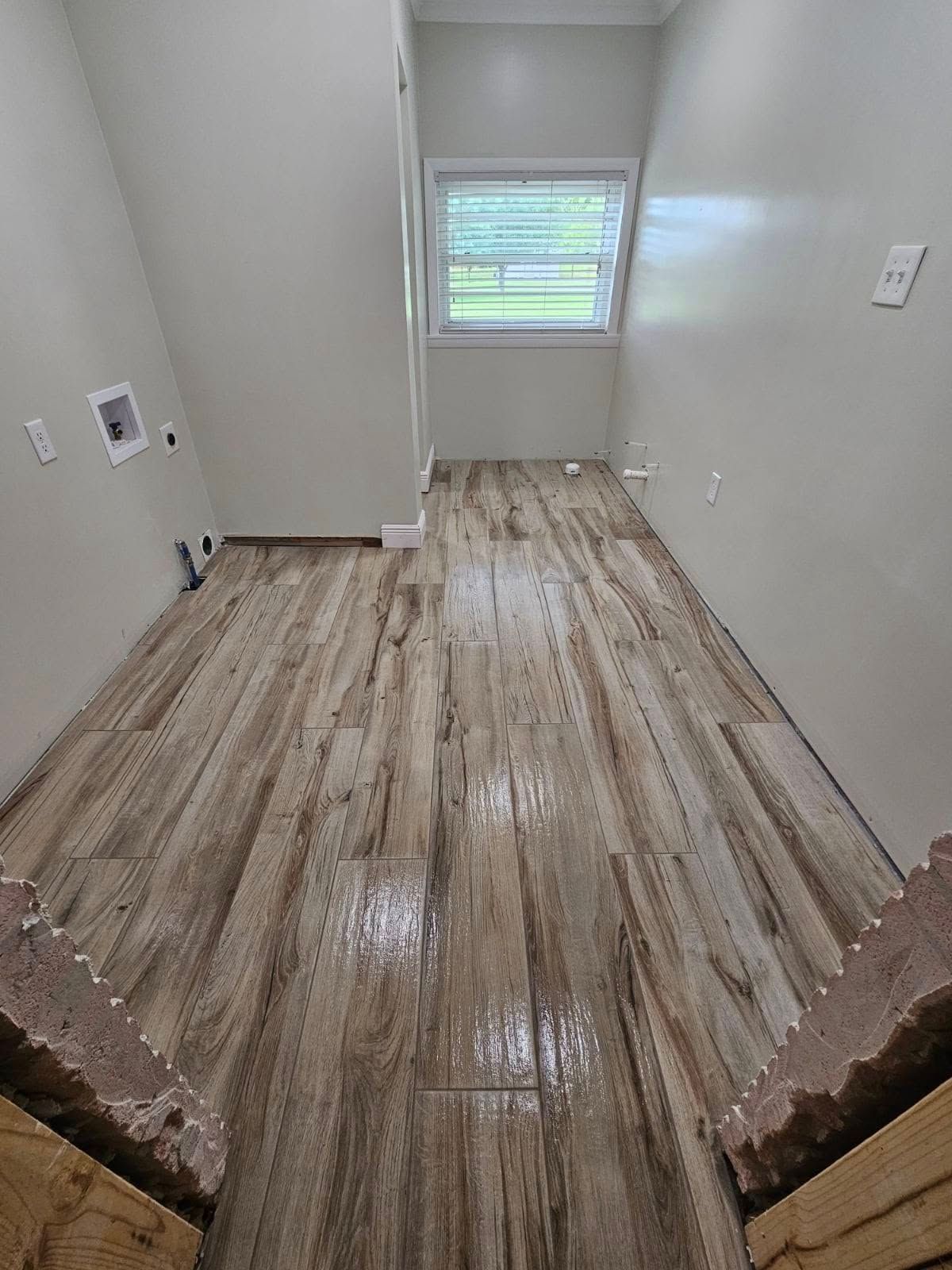
After installation, you'll walk on floors that feel stable without flex or bounce, see planks aligned in staggered patterns without obvious repeating sequences, and notice transitions that sit flush with adjacent flooring or carpet. The surface stays cool underfoot compared to carpet, resists staining from common household spills, and maintains appearance without annual sealing or refinishing required by hardwood or natural stone.
Installation includes removing existing flooring when needed, but additional prep work applies if the subfloor shows significant damage or unevenness beyond standard tolerance. Material cost varies based on wear layer thickness, design complexity, and whether you choose rigid core LVP or standard flexible planks, with thicker wear layers providing longer lifespan in high-traffic areas.
Answers to Frequent Service Questions
Flooring choices depend on understanding how different materials perform in specific rooms and what installation involves.
What makes LVP suitable for bathrooms and kitchens?
The vinyl composition resists water absorption, preventing the swelling and cupping that occurs when hardwood gets wet. LVP planks include waterproof cores that protect the subfloor even if standing water sits on the surface for extended periods.
How does laminate differ from LVP in performance?
Laminate costs less but can't handle standing water as effectively as LVP, making it better suited for bedrooms, living rooms, and dining areas rather than moisture-prone spaces. The melamine surface on laminate provides excellent scratch resistance, often outperforming LVP's wear layer against sharp objects.
What subfloor conditions cause installation problems?
Concrete with moisture readings above manufacturer thresholds requires vapor barriers, wooden subfloors with loose boards need re-fastening before new flooring goes down, and surfaces with height variations exceeding 3/16 inch over 10 feet create lippage between planks. These issues get addressed during prep work before installation begins.
How long does LVP or laminate installation take in Duson homes?
A standard room takes one to two days including prep work, while full-home installations span several days to allow for material acclimation, staged installation room by room, and proper attention to transition placement between spaces.
What maintenance keeps LVP and laminate looking new?
Regular sweeping or vacuuming removes abrasive dirt that dulls the surface, damp mopping with pH-neutral cleaners handles spills and stains, and felt pads under furniture legs prevent indentation and scratching. Unlike hardwood, these materials don't require periodic refinishing or wax application.
Floors N More completes LVP and laminate installations across the Acadiana region with reliable scheduling and quality workmanship. Call to schedule a consultation and review material samples based on your specific room requirements.