Surfaces That Add Lasting Property Value
Custom Hardwood Flooring in Duson for homeowners seeking high-end, timeless flooring in new construction or renovation projects
Hardwood flooring enhances resale value more consistently than laminate or carpet, provides a refinishable surface that extends lifespan decades beyond synthetic alternatives, and creates visual warmth that tile and vinyl cannot replicate. Floors N More provides custom hardwood flooring installation throughout Duson, offering guidance on wood species, finish options, and plank widths that match interior design goals while accounting for durability requirements. Installation precision matters because gaps, uneven boards, or poorly aligned seams reduce both appearance and longevity, undermining the investment in premium material.
Hardwood installation begins with wood selection based on hardness ratings, grain patterns, and how different species accept stain. Red oak offers affordability and widespread availability, white oak provides better moisture resistance and contemporary grain character, and exotic species like Brazilian cherry deliver exceptional hardness for high-traffic applications. Boards acclimate to interior humidity for at least a week before installation to minimize seasonal expansion and contraction, and installation methods include nail-down over wooden subfloors or glue-down over concrete depending on structural conditions.
Schedule a consultation to review wood types, finish options, and installation requirements for your project.
What Separates Quality Hardwood Installation
Proper hardwood installation requires moisture testing of both wood and subfloor to confirm compatibility, staggered board lengths to avoid visual patterns that look repetitive, consistent fastener spacing that prevents board movement without causing splits, and sanding sequences that remove installation marks while creating uniform surface smoothness. Finish application involves multiple coats with proper drying time between layers, and the final product should show consistent sheen without lap marks, bubbles, or areas where coverage appears thin.
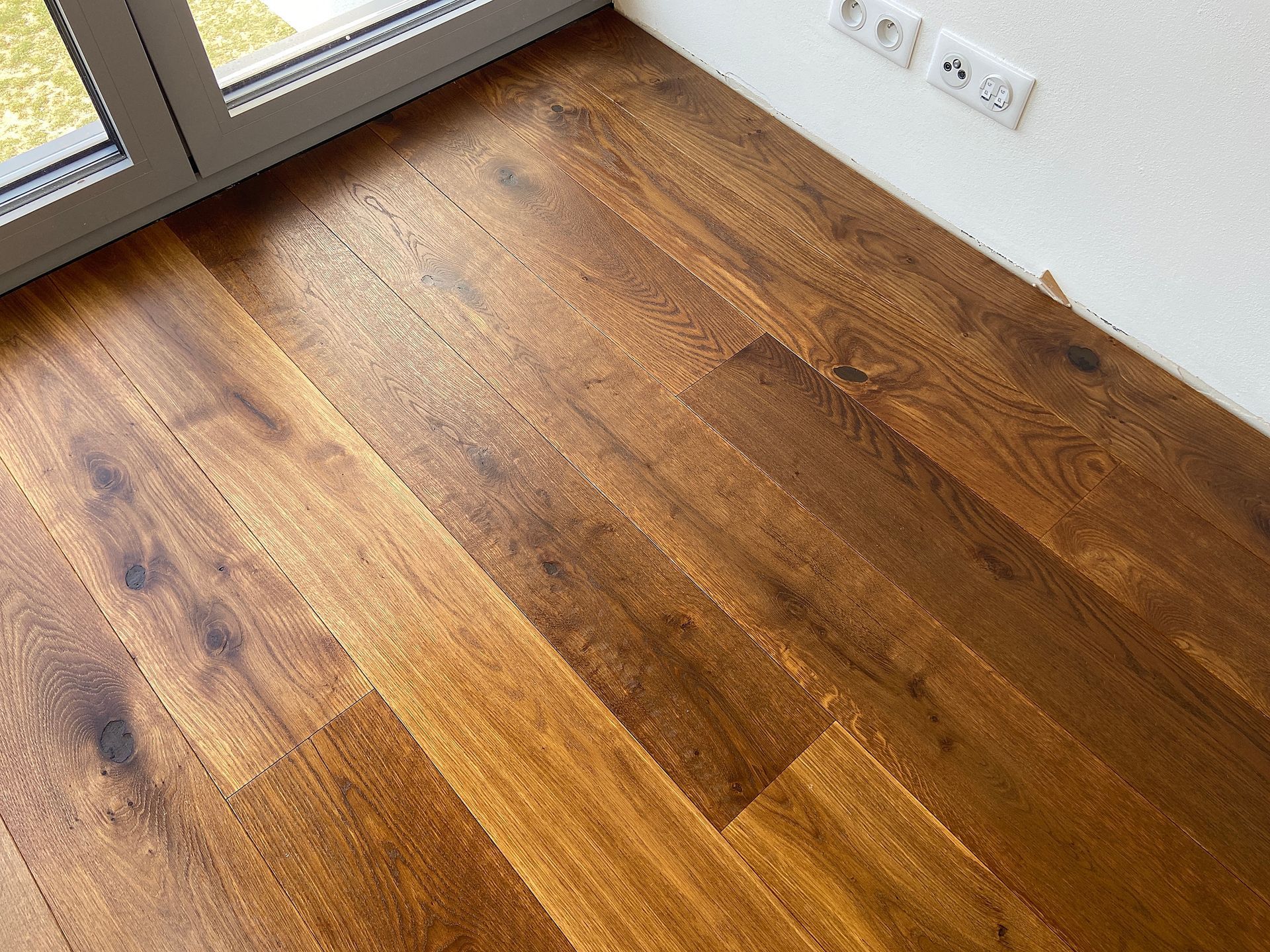
After installation and finishing, you'll notice flooring that reflects light evenly across the surface, transitions smoothly between rooms without height differences, and feels solid underfoot without squeaks or flex. The grain pattern flows naturally across the space, board edges align tightly without visible gaps, and the finish protects the wood while allowing the natural character to remain visible. Hardwood maintains this appearance for years and can be refinished multiple times when wear occurs, unlike pre-finished products with thin veneer layers.
Custom hardwood installation includes finish application, but additional costs apply for complex patterns like herringbone or diagonal layouts that require increased labor and material waste. Matching existing hardwood in renovations involves color matching and finish coordination, which may require custom staining to achieve seamless integration with aged flooring.
What Property Owners Usually Ask
Hardwood decisions involve balancing upfront investment against long-term value and understanding maintenance requirements that preserve appearance.
What wood species handle Acadiana humidity best?
White oak's closed grain structure resists moisture movement better than red oak's open grain, making it more dimensionally stable in Duson's humid climate. Proper acclimation and controlled interior humidity reduce problems regardless of species, but wood selection affects how much seasonal expansion occurs.
How does site-finished hardwood differ from pre-finished products?
Site-finished flooring allows custom stain colors and creates seamless surfaces without beveled edges between boards, but requires longer installation time for sanding and finish curing. Pre-finished boards install faster and avoid interior dust, but visible micro-bevels between planks create texture that collects dirt over time.
What happens during the finishing process?
Raw hardwood gets sanded in multiple passes using progressively finer grits to remove mill marks and create smooth surfaces. Stain application happens next if color change is desired, followed by polyurethane or oil finish coats that cure between applications, typically requiring several days before the floor can handle furniture and foot traffic.
When should hardwood be refinished?
Surface scratches, worn finish in traffic paths, and dull appearance indicate refinishing needs, typically occurring every 10 to 20 years depending on traffic levels and maintenance practices. Refinishing involves sanding away the old finish and applying new coats, a process that can happen multiple times over the floor's lifespan.
What maintenance protects hardwood flooring long-term?
Regular sweeping removes abrasive dirt, immediate cleanup prevents water damage, furniture pads eliminate scratches, and area rugs in high-traffic zones reduce wear. Refinishing becomes necessary less frequently when these practices prevent finish breakdown and deep scratching of the wood surface.
Floors N More brings decades of flooring experience to custom hardwood installations across the Acadiana region. Call the office to discuss wood options, finish preferences, and project timing based on your property needs.